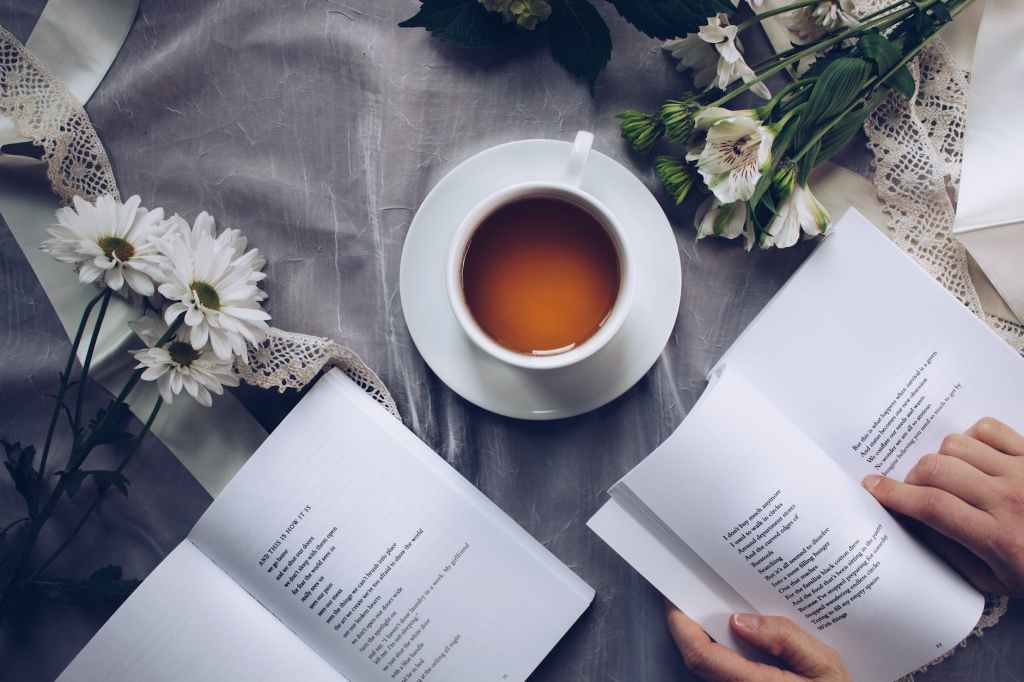
Writing poetry is the art of writing freely.
When we were taught poetry in school, we only encountered well-known figures like William Shakespeare and Robert Frost. Poetry had an exquisite and genius air to it, so we began to perceive it as out of reach for mere mortals like us.
In its history, poetry started out as an extremely restrictive art form where there are set rules as to meter, rhythm, and rhyme. It took great skill in language and thought to create a masterpiece. The concept of writing poetry as an act of writing freely is relatively new and foreign. Free verse poetry is highly conversational in style, and it doesn’t follow a particular form. Free verse equals writing freely and with the rise of spoken word poetry, I think that writing in free verse will continue to evolve and become more accepted in the future.
In addition, the idea of writing poetry as a personal way to navigate through the struggles of life is still quite novel. In a modern world where people are encouraged to think rationally and learn to manage instead of accepting and expressing emotions, I believe that the practice of writing poetry can be an incredibly freeing art for a lot of people.
The act of writing in itself is a healthy outlet for emotions. Expressing these emotions in an intentional, crafty, and artful manner (which is the essence of poetic writing) allows the writer to infuse a sense of reality into these emotions. A poem with its series of lines and collection of stanzas provide tangible evidence of the writer’s inner life. The words create an external manifestation and a semblance of order into an otherwise intangible chaos within: one that consists of underlying beliefs, present feelings, and past experiences that all blend together in the psyche.
Why I Write Poetry, and You Should Too
Now writing is rewarding because it gives exactly what you demand of it. Write about love, and you will find it in your writing. Write about joy, and you will remember that you are capable of it. Write about heartbreak, and you will find a way through the loss. Writing reveals what we lack, what we have, and what we want. In the process, it brings the intangible unconscious into the forefront of the conscious mind. We experience an increase in awareness of the self and one’s state of mind: We find what we seek.
I’ve listed below some of the reasons why I write poetry, which became clear to me over time as I started writing more. It helps to think about these now as you start your writing journey because having a solid sense of purpose as to why you want to write will help guide you to the topics and types of poems that will be best suited for you. Also, starting with a clear ‘why’ will help get you through hard times, especially when you don’t want to write. As a writer, you can use your ‘why’ as a compass to point you to your true north.
I hope that these points below can serve as your guide in crafting your own answers to the question:
Why do I write?
- I write to ask what is true for me. How do you know if something is true for you? I think something is true when it brings out your vulnerability. It’s true when something makes you smile. It’s especially true when it stings. And lastly, it’s true when it feels like you’re revealing too much. Good writing takes authenticity, vulnerability, and a deep form of generosity to let oneself be seen. The most beautiful poems are the hardest to write because they are the most honest ones. Writing is an act of looking within, and when we do, we learn to listen to our own voice. Over time, we distinguish what is truly ours as opposed to the scripts we have received from our family, culture, and society. When we write, we discover our personal truth.
- I write to learn how to occupy space. To say, I’m here. I’m alive, and that’s okay. As a culture, we are told that we need to learn how to manage ourselves and look after our own circles. And so there arises a tendency for us to want to stuff troubling emotions deep within us so we can function every day in a way that’s acceptable because we are not burdening anyone with our own problems. However, this is not a very healthy way to live. Expressing our emotions through the written word, however, helps us accept and own up to these emotions. We make it seem more real. We validate that it’s okay to sit down and feel more deeply. To put down these rules and these scripts that we play over and over in our heads, and to regain a sense of our own freedom. Writing tells you that you can feel free to take up space. To feel free to exist. To feel free to be different, to be yourself in a world that pressures you to conform.
- I write to take a mental picture of my inner life. Poetry is a lot like a painting. It takes time to construct poems that represent experience. It takes learning to add all necessary elements to produce a timeless work. Just like how we visit museums to view paintings from specific eras in time, there is a lot of value from revisiting old poetry and journal entries. Writing is a way to press record on life as it happens, like still portraits that capture shape and color. Poetry can help you travel in time. You can go back to specific moments in the past and see how far you’ve come. Poetry grants you full backstage access pass to your experiences.
- I write to make space for joy. Research shows that our memory is not as reliable as we think. Like us, we have a living memory, which works as a function of our own developing mind. Experience changes with you, because you give meaning to the experiences. Therefore, our memory has lapses too. We tend to remember negative events more clearly over positive ones because this is how our primitive brain attempts to protect us. It tells us to watch out and be careful not to repeat a painful event or behavior in the future. This can mean that when we’re alone, we have a greater tendency to ruminate on negative events more than positive memories. The thing is, joyful experiences are an invitation to become more actively present. The challenge as a writer is to fully experience and relish joy so that you don’t simply skip over it. And when the time comes, your writing will help you to rise above the limitations of your own memory, and remember joy better.
- I write to experience negative emotions without judgment. As creatures who desire safety, we like to pursue pleasure and avoid pain. Sooner or later, we become disillusioned to discover that avoiding negative experience is in itself, a negative experience. We cannot run from suffering in this life. What we can do though is to go through it bravely. Accepting it along the way. Writing helps us do exactly that. Negative emotions are signals that point to a truth. Our human task is to ask these emotions what they intend to teach. We need to act as if the pain is our truest friend so we can learn something from it. However, this is only possible if we have the courage to go through the fog, the confusion, and the darkness. When we give these powerful emotions the space to breathe, we learn to breathe too.
- I write to heal past wounds. As children, we go through difficult moments that we tend to carry with us as we age. This is the starting point and basis for all psychology. We are changed by our childhoods. We develop patterns within our personality and coping mechanisms that allowed us to live harmoniously alongside the negative experiences we’ve had. This is not necessarily a bad thing. However, as adults, we need to learn how to shed old skin. What applied to our situation as children need not be the script we are doomed to repeat in future stories. This is perhaps the greatest challenge of them all. Healing past wounds requires questioning old beliefs, learning to see imperfection as a feature of humanity and not as a defect, and developing new lenses from which to see in a more accurate and brighter light. Writing can help us be aware of these old wounds, so we can test their precision and truth. And once found, to engage in our own healing. To learn to accept these and let go.
- I write to play out scenarios in my head. Writing not only helps us make sense of the past but also to imagine a future that is ours. Writing helps quiet down fears, anxieties, and doubts through hopeful and free imagination. It is a free and safe space to live out stories, take on roles, and playout scenes. Writing asks ‘what if’ with an enthusiasm that imagines a different world, a different perspective, a different belief, and a different time. It’s like playing dress-up, only through words on blank pages.
- I write to connect. Writing for oneself is an achievement in itself, but I think that most people would agree that writing is a lonely art. It requires solitude to be able to dig deep into one’s soul. Sharing the resulting poetry is a different experience. It translates to rejoining the world, as the poetry speaks by itself and allows people to connect with your soul in a genuine manner. The writing binds lonely souls by acknowledging that the human condition is one and the same. Humanity, after all, is a shared solitude. We realize that we are not as different as we believe. When a poem is relatable, it hits straight home. It points to a something more universal, a reality shared.
- I write to tell stories. Stories are how we live forever, and it is true that the aim of all writing is to tell stories. However, writing about yourself – your joy, pain, and experience – does not equate to being proud and self-important, nor does it mean that you crave lasting glory and a legacy to leave behind. It does mean being true to yourself now. It does mean the willingness to be exposed and vulnerable as you are. It does mean building yourself once again. It does mean claiming your unique place in the world to say, this is me and that’s okay. Poetry, before anything else, means accepting your story. And the best part of it is you get to tell your own story.
And that’s all I have for you today. Thanks for reading all the way to the end. I hope that you can create your own list of why you want to write. As mentioned earlier, your ‘why’ will steer you in the right direction as you go about your journey.
If you have any more questions, or if you just want to drop by and say Hi, send me a message via the form in the home page. I would love to get in touch.
 Marielle Ignacio DeTorres
Leave a comment